
Customer retention & win-back
Find the customers about to leave, and the ones worth winning back.
Churn prediction from your order data, reactivation programmes that do not race to the bottom on discounts, and a loyalty programme designed around the behaviour you want — not the points you can afford.





Retention systems built for 150+ Shopify stores · Tiers from $3,500 a month
What is included
Everything the retainer covers, in the order we build it.
No add-on menu. The pieces below are the service; the tiers decide depth and whether SMS is in scope.
- 01
Retention audit and cohort analysis
Repeat rate and LTV by acquisition month, median reorder gaps by product, where customers drop off and what it costs — from your Shopify order history.
- 02
Churn-risk segmentation
At-risk segments built from reorder gaps, engagement decay and the platform’s predictive fields where the account has the history — refreshed daily.
- 03
Reactivation programme
Three lapsed tiers (60–120 days, 120 days+, high-value quiet) each with its own series: reason first, offer last, suppression when it is over.
- 04
High-value outreach
For the top 20% of customers who go quiet, a human touch — a personal email or a call script — because a flow is the wrong tool for a customer worth thousands.
- 05
Loyalty programme design
Tiers, earning rules and rewards designed around the behaviour you want (second orders, reviews, referrals, subscriptions), modelled for cost, built in Smile.io, Yotpo or LoyaltyLion.
- 06
Win-back and loyalty flows in the email platform
The programme lives in Klaviyo, Omnisend or Brevo as flows and segments your team can see and adjust — not in a black box.
- 07
Retention dashboard
Repeat rate and LTV by cohort, at-risk segment size, win-back revenue, loyalty redemption — one view, updated monthly, with the trend explained.
- 08
Monthly review and next actions
What moved, why, and the next changes to segments, offers and the loyalty rules — in a 30-minute call.
How we work
Six steps, six weeks to live, then monthly.
Each step ends with something written down. If we disappeared after step two you would still have a plan your team could run.
Week 1
We read your account before we touch it.
Where the revenue is leaking
Every flow, every campaign, list health, deliverability, segment logic and the revenue each piece attributes. You get the gaps ranked by money, not by opinion.
- 01Flow-by-flow revenue and send volume
- 02List capture, engagement and suppression health
- 03Deliverability: domains, complaint rate, inbox placement
- 04Segment logic against actual order data
- You get: A written audit with the first 90 days planned.
Week 2
RFM segments from your orders, and a calendar built around your peaks.
Segments and the calendar
Recency, frequency and monetary tiers from real order history; lifecycle stages; a campaign calendar that starts with your seasons, not a template.
- 01RFM and lifecycle segmentation
- 02Offer ladder by segment (who gets a discount, who never does)
- 03Send-time and frequency rules
- 04Campaign calendar for the next quarter
- You get: A strategy document your team can run without us.
Weeks 3–5
The core flows, written and designed for your brand.
Flows and templates
Welcome, browse and cart abandonment, post-purchase, replenishment, win-back and VIP — each with copy, design, timing and the split tests already planned.
- 01Copy and design per flow, on-brand
- 02Trigger, filter and timing logic checked against real orders
- 03Templates your team can reuse for campaigns
- 04SMS steps where they earn their place
- You get: Flows live, documented, with QA screenshots.
Week 6
Ramped sends, warmed domains, no spike.
Go-live without a deliverability hit
New flows go live in stages so engagement stays high and the sending reputation you have is protected. Campaigns start on the calendar from strategy.
- 01Staged rollout by segment
- 02Domain and IP warm-up if needed
- 03First campaigns on the new calendar
- 04Reporting dashboard set up
- You get: Everything running, with a baseline recorded.
Monthly
Subject lines, offers, timing and creative — one variable at a time.
A/B tests with a hypothesis
Every test has a written hypothesis and a minimum sample. Winners roll into the flows; losers are documented so nobody re-tests them.
- 01Subject line and preview text
- 02Offer type and depth by segment
- 03Send time and flow delays
- 04Design and layout variants
- You get: A test log with results and the next tests queued.
Monthly
One report: what each flow and campaign earned, and what changes next.
Revenue, not open rates
Attributed revenue by flow and campaign, list growth, repeat-purchase rate, email and SMS share of store revenue — and the plan for next month.
- 01Revenue by flow and campaign
- 02Repeat rate and LTV movement
- 03List and deliverability health
- 04Next month’s calendar and tests
- You get: A monthly report and a 30-minute review call.
Who this is for
Signs your store needs this now.
Six patterns we see in the audit. Two of them is a gap; four is a programme waiting to be built.
- 01
Blind spot
You only notice churn when revenue drops
The signal exists earlier: a customer past their usual reorder gap who has stopped opening. That is a segment, and it can be watched daily.
- 02
Win-back
The win-back email is a 20% coupon and a hope
Discounting lapsed customers back trains them to lapse again. Reactivation should lead with the reason they bought and save the offer for the last touch.
- 03
Loyalty
Points nobody redeems
A points programme with low redemption is a liability on the balance sheet and nothing in the customer’s head. Loyalty should reward the behaviour you want repeated.
- 04
Segments
Everyone who ever bought is “customers”
A customer three days after their first order and one who has not bought in a year are not the same audience. Recency, frequency and value split them.
- 05
LTV
You know AOV but not LTV by cohort
Whether retention is working shows up in 180- and 365-day LTV by acquisition month. If that number is not on a dashboard, retention cannot be managed.
- 06
Top customers
Your best customers leave quietly
The top 20% by spend rarely complain; they just stop. Their silence should trigger a person, not a flow.
Engagement options
Pick the tier that fits.
Two retainers, the prices on the page, and a free audit that tells you which one you need — or that you need neither yet.
A 60-minute call with your account open: every flow, campaign and segment read, the gaps ranked by revenue, written up the same day.
Free60 minutes
No pitch deck · if we are not the right fit, we say so
- 60 minutes, on a call, with your account open
- A written summary of the gaps, ranked by revenue
- No pitch deck. If we are not the right fit, we say so
Tier 1 · per month
For brands doing $500K–$2M a year.
$3,500
Month to month after the first 90 days · everything below included
- Full flow stack: welcome, browse, cart, post-purchase, replenishment, win-back, VIP
- Monthly campaign calendar, written and designed
- Segmentation and list health management
- Deliverability monitoring
- Monthly revenue report and review call
Most scaling brands
Tier 2 · per month
For scaling brands at $2M+.
$5,500
Month to month after the first 90 days · everything below included
- Everything in Tier 1
- SMS strategy, consent capture and flows
- Structured A/B testing programme with a test log
- Quarterly lifecycle deep-dive and re-segmentation
- Loyalty and VIP programme design
- Priority turnaround on campaigns
Brands above $10M, multi-store groups and platform migrations are scoped individually after the audit.
Recent work
Email built for 150+ Shopify stores.
Flows and campaigns we wrote and designed. The results for these brands sit under NDA; the work is public.
All services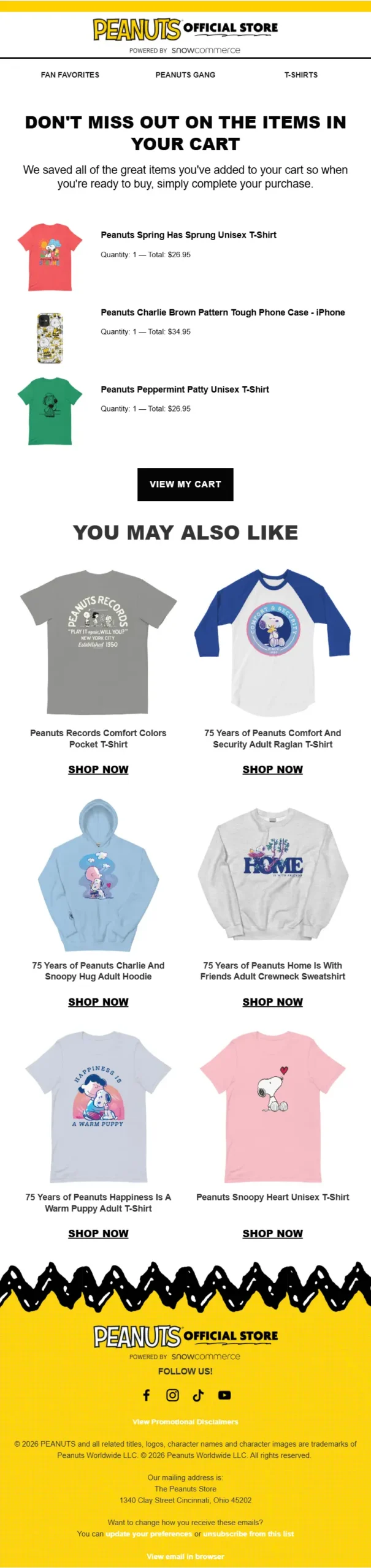





Also on this site: Petworld International, Myntgift, Matter of Monday — and 150+ Shopify stores whose results sit under NDA.
Questions
Frequently asked questions
What is customer retention, in simple words?
Customer retention is keeping the customers you already have buying from you instead of a competitor. In a Shopify store it shows up as repeat orders, a shorter gap between orders and customers who stay active for years rather than months.
How do you calculate customer retention rate?
Customer retention rate is ((customers at the end of the period minus new customers gained in it) divided by customers at the start) times 100. For ecommerce, repeat purchase rate is often more useful: the share of customers who placed a second order within a set window, usually twelve months.
What is a good customer retention rate?
It depends on the category. For most Shopify stores a repeat purchase rate of 20% to 30% within twelve months is typical; consumables, beauty and pet supplies run higher, one-off purchases like furniture lower. So 20% can be healthy for a mattress brand and a warning sign for a coffee brand. Track your own rate by cohort before comparing it with anyone else's.
What are the three R's of customer retention?
The version most people quote is recognition, relationships and rewards: customers stay when they feel known, are spoken to as individuals and are rewarded for coming back. An older loyalty-economics version is retention, related sales and referrals, which measures the same thing from the business side. In practice they map to VIP recognition, lifecycle flows and a loyalty programme.
How do you improve customer retention?
Start where customers leave. Fix the post-purchase sequence so the second order is set up, time replenishment to real reorder cycles, catch lapsing customers when their buying pattern breaks, and give your top 10% a reason to feel recognised. Then measure repeat rate by cohort every month. The free audit shows which of these is costing you most.
How do you predict churn without a data team?
From the order data you already have: median days between orders per product, engagement decay, and the predictive churn-risk and CLV fields Klaviyo and Omnisend expose once an account has enough history. It is segmentation, not machine learning theatre.
Do win-back campaigns work without discounts?
Better than with them for most brands. The first touches restate the reason to buy and what is new; the last touch carries an offer if one is needed. Customers won back without a discount stay longer.
Which loyalty platforms do you design for?
Smile.io, Yotpo Loyalty and LoyaltyLion most often. The design comes first — tiers, earning rules, reward costs — and the platform is chosen to fit it.
How is this different from the DTC service?
DTC retention marketing works on the first 90 days, subscriptions and VIP. Customer retention and win-back works on the other end: who is about to leave, who has left, and the loyalty structure that keeps the middle. Many brands run both inside the retention programme.
What numbers do you report?
Repeat-purchase rate and LTV by cohort, at-risk segment size and movement, win-back revenue attributed, loyalty enrolment and redemption — monthly.
What does it cost?
Included in Tier 1 ($3,500 a month, brands at $500K–$2M) for reactivation and segmentation; loyalty programme design and quarterly re-segmentation sit in Tier 2 ($5,500 a month, brands at $2M+). Both begin with the free 60-minute audit.
Retention experts
Let's talk email, SMS and the repeat revenue you actually want.
We work on Klaviyo, Omnisend, Brevo and Attentive. Ready when you are: talk to the person who will run your account, not a sales rep.
Get in touch