
Ecommerce retention programme
The retention system for a Shopify catalogue, run every month.
Flows that know your products, campaigns that merchandise, reorder cycles read from real order data, a testing programme and a revenue report — one team, one monthly fee, from $3,500.





Retention systems built for 150+ Shopify stores · Tiers from $3,500 a month
What is included
Everything the retainer covers, in the order we build it.
No add-on menu. The pieces below are the service; the tiers decide depth and whether SMS is in scope.
- 01
Audit and 90-day plan
The account, the flows, the list, the catalogue and the order history — then a ranked plan for the first quarter with the revenue each item is expected to move.
- 02
Catalogue-aware flows
Welcome, browse, cart, post-purchase, replenishment, win-back and VIP, each pulling products by behaviour: what was viewed, bought, left behind or is about to run out.
- 03
Reorder cycles from real order data
Replenishment timing set per product from median days between orders, not a guessed 30-day delay. Adjusted as the data moves.
- 04
Merchandising in email
Best-sellers, new arrivals, low-stock and bundles placed in flows and campaigns by segment, so email sells the catalogue the way the store does.
- 05
Monthly campaign calendar
Four to eight campaigns a month on a quarterly calendar built around your launches, seasons and peaks — BFCM planned in August, not November.
- 06
Segmentation and offer strategy
RFM and lifecycle segments from Shopify orders; an offer ladder that protects margin on loyal customers and spends incentives where they change behaviour.
- 07
Testing programme
Two to four tests a month with written hypotheses and minimum samples; winners rolled into flows, results logged.
- 08
List growth and deliverability
Capture that holds consent, engagement-based suppression, complaint and placement monitoring — weekly, not when something breaks.
- 09
SMS moments (Tier 2)
Restock, flash, delivery and win-back texts orchestrated inside the same flows, with consent and quiet-hours rules built in.
- 10
Monthly revenue report and review
Revenue by flow and campaign, repeat rate by cohort, email and SMS share of revenue, list health, and next month’s calendar — in a 30-minute call with the account open.
How we work
Six steps, six weeks to live, then monthly.
Each step ends with something written down. If we disappeared after step two you would still have a plan your team could run.
Week 1
We read your account before we touch it.
Where the revenue is leaking
Every flow, every campaign, list health, deliverability, segment logic and the revenue each piece attributes. You get the gaps ranked by money, not by opinion.
- 01Flow-by-flow revenue and send volume
- 02List capture, engagement and suppression health
- 03Deliverability: domains, complaint rate, inbox placement
- 04Segment logic against actual order data
- You get: A written audit with the first 90 days planned.
Week 2
RFM segments from your orders, and a calendar built around your peaks.
Segments and the calendar
Recency, frequency and monetary tiers from real order history; lifecycle stages; a campaign calendar that starts with your seasons, not a template.
- 01RFM and lifecycle segmentation
- 02Offer ladder by segment (who gets a discount, who never does)
- 03Send-time and frequency rules
- 04Campaign calendar for the next quarter
- You get: A strategy document your team can run without us.
Weeks 3–5
The core flows, written and designed for your brand.
Flows and templates
Welcome, browse and cart abandonment, post-purchase, replenishment, win-back and VIP — each with copy, design, timing and the split tests already planned.
- 01Copy and design per flow, on-brand
- 02Trigger, filter and timing logic checked against real orders
- 03Templates your team can reuse for campaigns
- 04SMS steps where they earn their place
- You get: Flows live, documented, with QA screenshots.
Week 6
Ramped sends, warmed domains, no spike.
Go-live without a deliverability hit
New flows go live in stages so engagement stays high and the sending reputation you have is protected. Campaigns start on the calendar from strategy.
- 01Staged rollout by segment
- 02Domain and IP warm-up if needed
- 03First campaigns on the new calendar
- 04Reporting dashboard set up
- You get: Everything running, with a baseline recorded.
Monthly
Subject lines, offers, timing and creative — one variable at a time.
A/B tests with a hypothesis
Every test has a written hypothesis and a minimum sample. Winners roll into the flows; losers are documented so nobody re-tests them.
- 01Subject line and preview text
- 02Offer type and depth by segment
- 03Send time and flow delays
- 04Design and layout variants
- You get: A test log with results and the next tests queued.
Monthly
One report: what each flow and campaign earned, and what changes next.
Revenue, not open rates
Attributed revenue by flow and campaign, list growth, repeat-purchase rate, email and SMS share of store revenue — and the plan for next month.
- 01Revenue by flow and campaign
- 02Repeat rate and LTV movement
- 03List and deliverability health
- 04Next month’s calendar and tests
- You get: A monthly report and a 30-minute review call.
Who this is for
Signs your store needs this now.
Six patterns we see in the audit. Two of them is a gap; four is a programme waiting to be built.
- 01
Ownership
Retention is nobody’s job
The paid team owns acquisition, the founder writes the newsletter when there is time, and the flows were set up by whoever built the store. That is how email ends up at 12% of revenue.
- 02
Catalogue
Every email shows the same five products
If your flows do not know what someone bought, browsed or ran out of, they cannot recommend the right thing. Catalogue-aware email is the difference between a newsletter and a store.
- 03
Reorders
Consumables are not being reordered on time
Median days between orders exists in your order data, per product. A replenishment flow that ignores it sends too early or too late — both lose the sale.
- 04
Budget
80% of the budget goes to acquisition
Most brands spend most of their money on the first order. Retaining a customer is roughly five times cheaper than acquiring one; the programme exists to shift that ratio.
- 05
Cadence
Campaigns happen when someone remembers
A retention programme runs on a calendar: launches, seasons, restocks, VIP moments. If sends are ad hoc, so is the revenue.
- 06
Reporting
You cannot answer “what did retention earn last month?”
The number exists in every platform. A programme puts it in front of you monthly, with the plan that follows from it.
Engagement options
Pick the tier that fits.
Two retainers, the prices on the page, and a free audit that tells you which one you need — or that you need neither yet.
A 60-minute call with your account open: every flow, campaign and segment read, the gaps ranked by revenue, written up the same day.
Free60 minutes
No pitch deck · if we are not the right fit, we say so
- 60 minutes, on a call, with your account open
- A written summary of the gaps, ranked by revenue
- No pitch deck. If we are not the right fit, we say so
Tier 1 · per month
For brands doing $500K–$2M a year.
$3,500
Month to month after the first 90 days · everything below included
- Full flow stack: welcome, browse, cart, post-purchase, replenishment, win-back, VIP
- Monthly campaign calendar, written and designed
- Segmentation and list health management
- Deliverability monitoring
- Monthly revenue report and review call
Most scaling brands
Tier 2 · per month
For scaling brands at $2M+.
$5,500
Month to month after the first 90 days · everything below included
- Everything in Tier 1
- SMS strategy, consent capture and flows
- Structured A/B testing programme with a test log
- Quarterly lifecycle deep-dive and re-segmentation
- Loyalty and VIP programme design
- Priority turnaround on campaigns
Brands above $10M, multi-store groups and platform migrations are scoped individually after the audit.
Recent work
Email built for 150+ Shopify stores.
Flows and campaigns we wrote and designed. The results for these brands sit under NDA; the work is public.
All services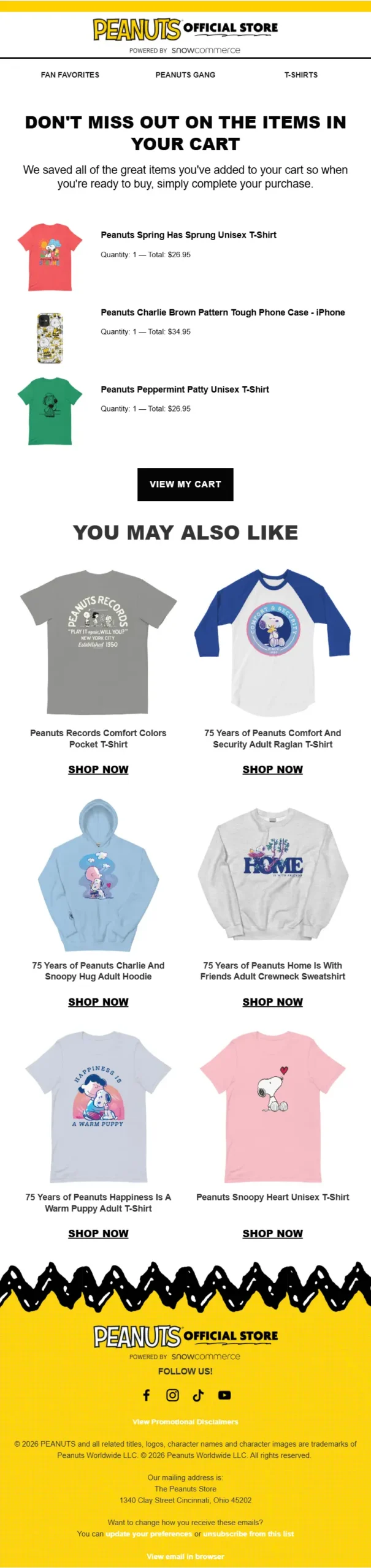





Also on this site: Petworld International, Myntgift, Matter of Monday — and 150+ Shopify stores whose results sit under NDA.
Questions
Frequently asked questions
What is ecommerce retention marketing?
Ecommerce retention marketing is everything a store does to turn first-time buyers into repeat customers and raise their lifetime value: automated email and SMS flows, loyalty and rewards, subscriptions and replenishment, and segmentation built on purchase behaviour. It is measured on repeat purchase rate, purchase frequency and customer lifetime value.
What is a good repeat purchase rate for a Shopify store?
For most Shopify stores, 20% to 30% of customers ordering again within twelve months is typical. Consumables, beauty and pet supplies run well above that; furniture and other one-off purchases run well below. The useful comparison is your own rate quarter on quarter, split by first-order product, which is how we report it.
What is the difference between this and the email service?
Email retention marketing is the channel: flows and campaigns. The ecommerce retention programme is the whole system run as a retainer — catalogue logic, reorder cycles, merchandising, testing, SMS in Tier 2, and the monthly reporting cadence. Most brands who want an outcome rather than a channel choose this.
How long is the commitment?
Month to month after the first 90 days. The first quarter is where the build happens; after that you keep us because the report says so, or you take the system in-house — it is documented for exactly that.
Which platforms?
Klaviyo, Omnisend and Brevo for email; Attentive or Klaviyo SMS for text. We work on all four. If your current platform cannot do catalogue-aware flows properly, the audit says so before we build.
Do you need access to Shopify?
Collaborator access to Shopify and admin access to the email platform. Order history is what the segments and reorder cycles are built from.
What do we have to do?
Approve copy and design (usually within 48 hours), tell us about launches and stock, and join a 30-minute call a month. Everything else is ours.
How do you measure success?
Attributed revenue from flows and campaigns, repeat-purchase rate by cohort, and email/SMS share of total store revenue — the three numbers on the first page of every monthly report.
What does it cost?
Tier 1 is $3,500 a month for brands doing $500K–$2M a year. Tier 2 is $5,500 a month for brands at $2M+ and adds SMS, the structured testing programme, quarterly deep-dives and loyalty design. Larger or multi-store brands are scoped after the audit.
Retention experts
Let's talk email, SMS and the repeat revenue you actually want.
We work on Klaviyo, Omnisend, Brevo and Attentive. Ready when you are: talk to the person who will run your account, not a sales rep.
Get in touch