
If you’re running a Shopify store, Klaviyo flows for Shopify are the single biggest lever you’re probabl underusing. Here’s a number that should bother you: the average Shopify store loses 97-98% of its visitors without a sale.
Most of those people aren’t gone forever. They browsed. They added something to cart. They almost bought. And if you’re not following up with them automatically, you’re leaving money on the table every single day.
That’s what Klaviyo flows are for.
In this guide, I’m going to walk you through exactly what Klaviyo flows are, which ones you actually need, how to set them up, and how to know if they’re working. No fluff. Let’s dive in.
What Are Klaviyo Flows?
A flow is an automated sequence of emails (or texts) that gets triggered by something a customer does — or doesn’t do.
Someone signs up for your list? That triggers a welcome flow. Someone adds a product to cart and leaves? That triggers a cart abandonment flow. Someone hasn’t ordered in 90 days? That triggers a win-back flow.
You set it up once. It runs forever. That’s the whole appeal.
Flows vs Campaigns : What’s the Difference
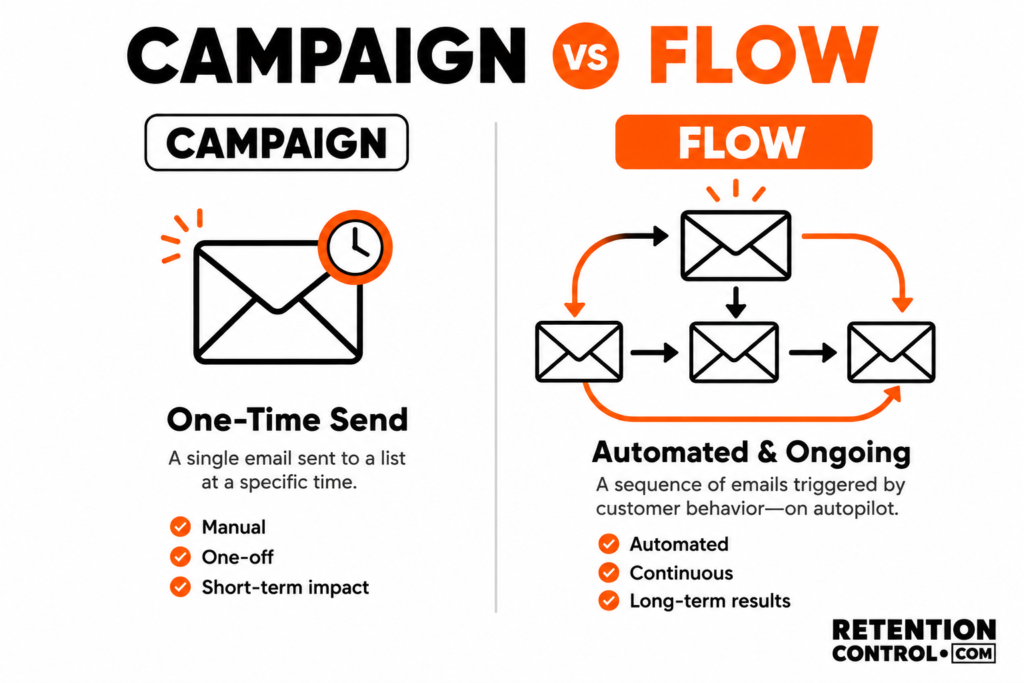
I see this confuse a lot of store owners, so let’s clear it up fast.
- Campaigns are one-time sends. Think: “24-hour flash sale” or “New collection just dropped.” You hit send, it goes out, it’s done.
- Flows are automated and ongoing. You build them once, and they keep running in the background, reacting to customer behavior in real time.
Campaigns are great for announcements. Flows are what actually make you money while you sleep.
Why Flows Are Klaviyo’s Most Powerful Feature for Shopify Stores
Here’s the thing about flows — they’re triggered by intent. Someone who abandoned a cart has already shown you they want the product. That’s a completely different (and far warmer) audience than someone seeing a cold ad for the first time.
That’s why flow emails consistently outperform campaign emails on almost every metric open rate, click rate, and especially revenue per recipient.
Why Shopify Brands Need Klaviyo Flows
The Revenue Sitting in Your Existing Customer List
If you’re only focused on paid ads and organic traffic, you’re ignoring the cheapest, highest-converting audience you already have: people who’ve already interacted with your brand.
Cart abandoners. Past customers. Email subscribers who haven’t bought yet. That list is sitting there right now, and every day without flows running is revenue you’ll never get back.
Automation vs Manual Email Marketing
Manually emailing every abandoned cart or every new subscriber isn’t scalable and honestly, it’s not even good practice. Automation lets you:
- Respond within minutes, not days
- Personalize based on actual behavior
- Run 24/7 without lifting a finger
- Scale without adding headcount
The Must-Have Klaviyo Flows for Every Shopify Store
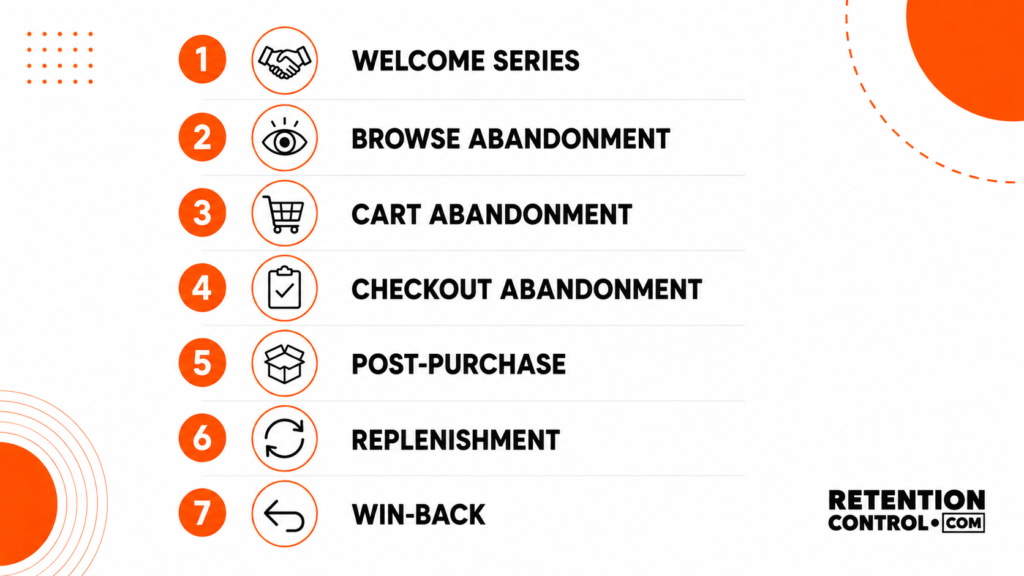
If you only build a handful of flows, build these. This is the backbone of an email retention setup, and it’s exactly what we build first for every client we onboard.
Welcome Series Flow
This is your first impression don’t waste it on a single “thanks for subscribing” email.
A strong welcome series usually runs 3-5 emails over 7-10 days and should:
- Tell your brand story (why you exist, what makes you different)
- Showcase bestsellers or social proof
- Handle common objections (shipping, returns, quality)
- Deliver the discount you promised (if you offered one)
Browse Abandonment Flow
Someone viewed a product (or three) and left without adding to cart. That’s not disinterest that’s hesitation.
This flow should trigger within an hour of the browse and remind them what they looked at, ideally with social proof or a reason to come back.
Cart Abandonment Flow
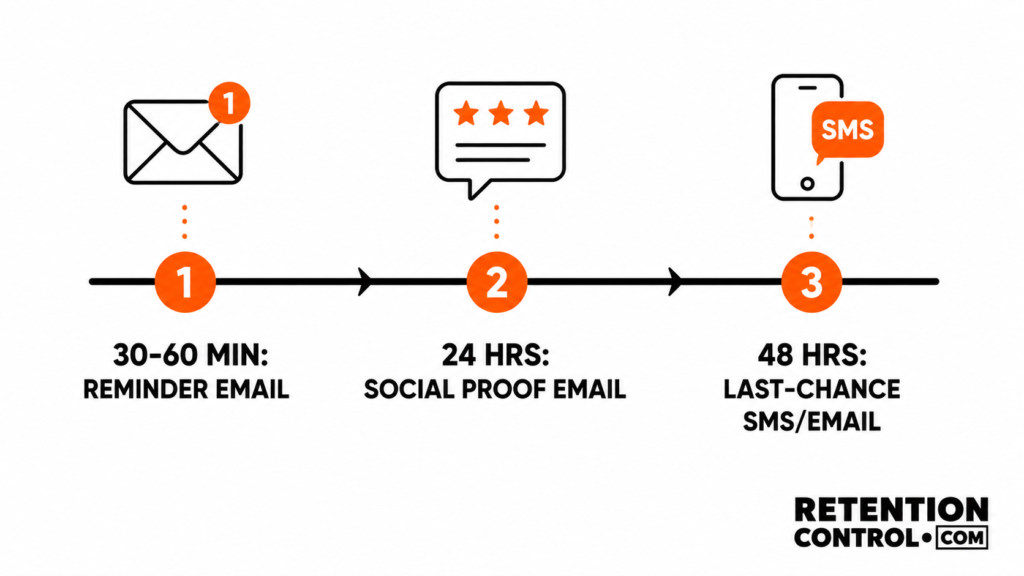
This is the highest-converting flow in almost every Klaviyo account. Someone added to cart they’re one step from buying.
A good cart flow is usually 2-3 messages:
- A reminder within 30-60 minutes
- Social proof or urgency at 24 hours
- A last-chance nudge (sometimes with SMS) at 48 hours
Checkout Abandonment Flow
Different from cart abandonment this is for people who actually started checkout but didn’t complete it. They’re even closer to buying, so this flow should be faster and more direct.
Post-Purchase Flow
Most brands go silent after the sale. Don’t be most brands.
Use this flow to:
- Reduce “where’s my order” anxiety
- Ask for a review at the right moment
- Introduce complementary products
- Set up the second purchase before they even think about it
Replenishment Flow
If you sell a consumable or a product with a natural reorder cycle, calculate the average time between purchases and time a nudge right before they’re expected to run out.
Win-Back Flow
Lapsed customers aren’t lost they’re just being ignored. Identify when someone typically goes cold (60, 90, 120 days without a purchase) and intercept them before a competitor does.
VIP/Loyalty Flow
Your top 10% of customers deserve more than the same generic email as everyone else. Give them early access, exclusive offers, and recognition these are the customers who refer friends and forgive the occasional stockout.
Klaviyo SMS: When and How to Add It to Your Flows
Email-Only vs Email + SMS Flows
Email is great for storytelling and detail. SMS is great for urgency and immediacy. You don’t need SMS in every flow but layering it into the right ones significantly lifts conversion.
Best Use Cases for SMS in Klaviyo
- Cart abandonment (final reminder)
- Flash sales with tight windows
- Restock alerts
- Shipping confirmations
Don’t bolt SMS onto everything just because you can. Every text should have a reason to exist if it doesn’t add urgency or value, skip it.
SMS Compliance Basics
Before you turn on SMS, make sure you understand TCPA requirements and proper opt-in language. Getting this wrong can get your number blocked or worse. This isn’t legal advice check with Klaviyo’s compliance resources or a legal professional before launching SMS at scale.
Klaviyo Segmentation:Making Flows Smarter
Flows are only as good as the segments feeding them. Same email to everyone = same mediocre results.
Behavioral Segmentation
Group people by what they’ve actually done: browsed 3+ times, purchased in the last 30 days, opened your last 5 campaigns, etc.
RFM Segmentation in Klaviyo
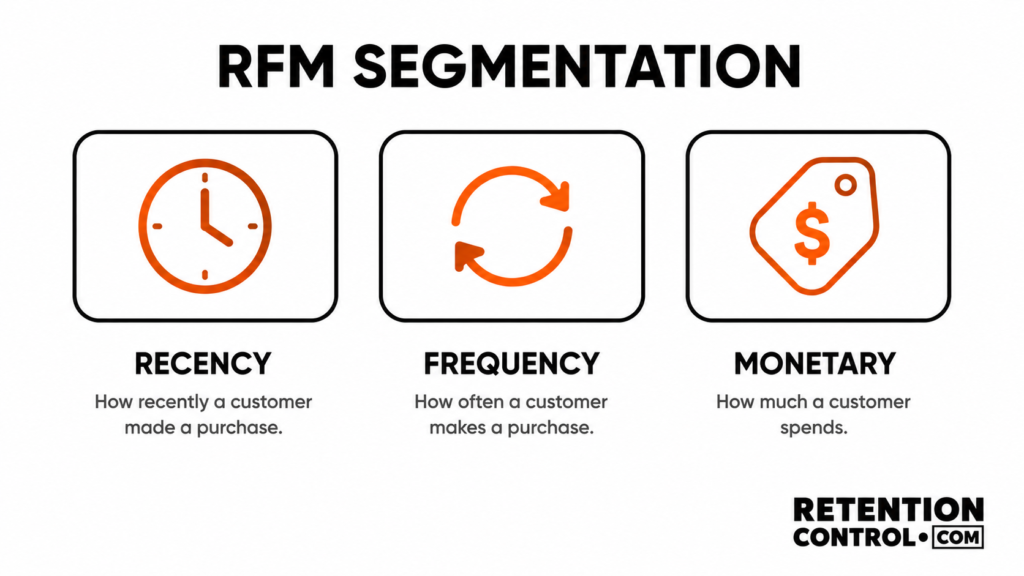
RFM stands for Recency, Frequency, Monetary — how recently someone bought, how often they buy, and how much they spend. This is one of the most useful segmentation models for identifying your VIPs and your at-risk customers.
Predictive Analytics
Klaviyo’s predictive features can estimate customer lifetime value and churn risk based on purchase history —letting you get ahead of a win-back before the customer even realizes they’ve drifted.
How to Set Up Your First Klaviyo Flow (Step-by-Step Walkthrough)
Connecting Klaviyo to Shopify
Install the Klaviyo app from the Shopify App Store and connect your store. This syncs your customer, order, and product data automatically — the foundation everything else is built on.
Choosing a Flow Trigger
Every flow starts with a trigger: list signup, checkout started, added to cart, placed order, and so on. Pick the trigger that matches customer intent for the flow you’re building.
Building the Flow Logic
This is where conditional splits and time delays come in. For example: “Wait 1 hour → check if order was placed → if not, send email 1 → wait 24 hours → send email 2.”
Writing Flow Copy That Converts
Don’t just template this. Every email should have one clear goal and one clear CTA — not five.
Klaviyo Flow Copywriting Best Practices
Subject Lines That Get Opened
Keep it short, specific, and curiosity-driven. Avoid generic lines like “Don’t forget your cart” try something that speaks to the actual product or hesitation.
Structuring Emails for Scannability
Short paragraphs. Clear hierarchy. One idea per section. Most people skim design for that.
CTAs That Actually Get Clicked
One primary CTA per email, repeated if the email is long. Make the button text specific (“Shop the Sale”) rather than generic (“Click Here”).
How to Measure Klaviyo Flow Performance
Key Metrics
- Open rate — is your subject line working?
- Click-through rate — is your content compelling enough to act on?
- Conversion rate — are clicks turning into sales?
- Revenue per recipient — the metric that actually matters for ROI
Benchmarks by Flow Type
Cart abandonment flows typically convert far higher than campaigns. Welcome flows should see strong open rates since the subscriber just opted in. If your numbers are noticeably below industry averages, that’s a sign your segmentation, timing, or copy needs work.
A/B Testing Your Flows
Test one variable at a time subject line, send delay, or offer. Give each test enough volume to be statistically meaningful before declaring a winner.
Common Klaviyo Flow Mistakes That Cost Shopify Brands Revenue
- Turning on default templates and never touching them again
- Sending the same flow to everyone regardless of segment
- Over-discounting in every single flow
- Ignoring SMS compliance
- Never reviewing flow performance after launch
- Treating flows as “set and forget” instead of a living system
DIY Klaviyo Setup vs Hiring a Klaviyo Agency
When DIY Makes Sense
If you’re an early-stage store with simple needs and time to learn, Klaviyo’s native templates can get you a basic setup running.
When to Bring in a Klaviyo Specialist
Once you’re scaling past six figures, the cost of a mediocre flow setup (in lost revenue) usually outweighs the cost of hiring a specialist. A dedicated Klaviyo agency brings segmentation strategy, copywriting, deliverability management, and ongoing optimization not just a one-time build.
Frequently Asked Questions
How many Klaviyo flows should a Shopify store run?
Most stores should have at least the core seven: welcome, browse abandonment, cart abandonment, checkout abandonment, post-purchase, win-back, and VIP/loyalty. Replenishment is essential if you sell consumables.
Is Klaviyo better than Omnisend for Shopify?
Klaviyo has deeper native Shopify integration and more advanced segmentation, which is why it’s the most widely used platform among Shopify brands. Omnisend can be a solid fit for smaller stores wanting simpler multichannel automation.
How much revenue can Klaviyo flows generate?
It varies by store, but flows regularly account for a significant share of total email revenue since they target high-intent moments in the customer journey.
How long does it take to set up Klaviyo flows properly?
A basic setup can take a few days. A fully optimized system with proper segmentation, tested copy, and SMS layered in — typically takes several weeks to build right.
Final Thoughts
Klaviyo gives you the tool. Flows are how you actually use it to make money.
If you’re running a Shopify store without the core Klaviyo flows for Shopify live, you’re leaving revenue on the table every single day revenue from people who already showed interest in buying from you.
Want us to look at your account and tell you exactly what’s missing?
Book a free Klaviyo flow audit and we’ll show you where the gaps are.