
Most Shopify brands walk into BFCM with a promo calendar and a hope. Campaigns get written, discounts get scheduled, and then the sale opens and the inbox goes quiet the moment someone doesn’t click “buy now.” That silence is where retention is won or lost. Flows are what catch the customer when a campaign can’t, and during BFCM, that difference is worth far more than another 10% off banner.
This guide breaks down exactly which BFCM retention flows to build in Klaviyo, how to time them, and the setup details that separate a flow that fires correctly from one that quietly fails during your highest-traffic week of the year. If you’re still working out your broader retention approach, our BFCM retention marketing guide covers the strategy side. This one is the implementation layer.
Why BFCM Retention Needs Flows, Not Just Campaigns
A campaign is a single scheduled send. Everyone on the list gets it at the same time, regardless of where they are in their buying journey. A flow is triggered by behavior, someone abandons a cart, browses a product, places an order, and it responds to that specific action. During a normal month, campaigns can carry most of the weight. During BFCM, they can’t.
Flows vs. Campaigns During BFCM
Traffic during Black Friday and Cyber Monday moves in hours, not days. A shopper who adds an item to cart at 11pm and doesn’t check out needs a message within the hour, not whenever your next scheduled campaign goes out. Flows handle that timing automatically. Campaigns still matter for the big announcement moments, but flows are what recover the revenue happening in between them.
How Flows Protect Deliverability When Volume Spikes
Sending six times your normal email volume to a cold list is one of the fastest ways to get throttled by Gmail during the exact week it matters most. Flows, because they’re triggered by genuine engagement or purchase behavior, tend to get opened and clicked more reliably than blanket campaigns. That engagement signal is part of what keeps your sender reputation intact when volume climbs.
Before You Build: Klaviyo Foundations to Check First
Building flows on top of a messy account creates more problems than it solves. A few things need to be in place first. If you’re not sure where your account currently stands, our BFCM 2026 readiness check walks through exactly this before you touch a single flow.
List Hygiene and Sender Reputation
Sunset subscribers who haven’t opened anything in 90 to 180 days before your BFCM sends ramp up. A smaller, engaged list will outperform a bloated, unresponsive one every time deliverability is under pressure, and BFCM is exactly when that pressure shows up.
Smart Sending and Purchase Suppression
Klaviyo’s Smart Sending setting prevents the same person from getting hit with a flow email and a campaign on the same day, which matters when campaign volume triples during peak week. Purchase suppression should be checked on every revenue-driving flow so a customer who already bought doesn’t keep getting a cart reminder for the item they own.
Segmenting by Engagement, Not Just Purchase History
Your most engaged subscribers can usually absorb more frequency without complaint. Less engaged segments need lighter touches during BFCM, or they’re the ones most likely to mark you as spam when the volume increases. Build this segmentation before the sale starts, not while it’s live.
The 8 BFCM Retention Flows Every Klaviyo Account Needs
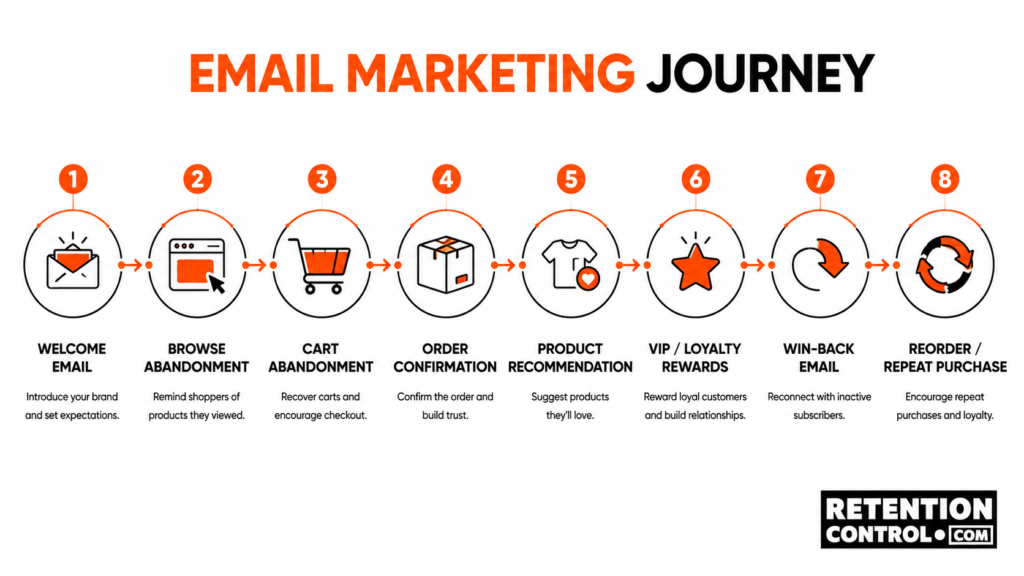
Welcome Flow (Q4 Branch)
Someone signing up in November has different intent than someone signing up in June, they likely came in through a BFCM-specific offer or ad. Add a conditional split so new Q4 subscribers see messaging that acknowledges the sale, instead of a generic year-round welcome sequence that ignores what actually brought them in.
Browse Abandonment Flow
Triggered when someone views a product but doesn’t add to cart. Keep this one light, a single reminder within a few hours works better than a full campaign-style message. During BFCM, browse intent converts fast or not at all.
Cart and Checkout Abandonment Flow
This is usually the highest-revenue flow in any Klaviyo account, and it needs the most attention during BFCM. Segment it by cart value so a $200 cart gets a different sequence than a $20 one, and make sure product availability and shipping cutoff dates are pulled in dynamically so you’re never recovering a cart for something that’s already sold out.
BFCM Post-Purchase Flow
Confirms the order, sets shipping expectations honestly given peak-season delays, and opens the door to the next interaction. This flow is where most brands go silent after checkout, which is exactly why it’s worth building properly instead of leaving it as the default Shopify confirmation email.
Cross-Sell and Upsell Flow
Triggered a week or two after delivery rather than immediately at checkout. Recommending a genuinely complementary product once someone has had time to use their purchase converts far better than pushing an upsell before they’ve even opened the box.
VIP Early Access Flow
Built for your top 10% by spend or order frequency. Give this segment access to the sale before it opens publicly. It rewards loyalty and takes pressure off your site and inbox during the actual public launch window.
Win-Back Flow for Discount Buyers
Targeted at BFCM buyers who haven’t returned 60 to 90 days later. This flow needs a different angle than a generic win-back, most of these customers bought on a discount, so leading with value and relevance works better than training them to wait for another markdown.
Replenishment / Reorder Flow
For consumable or wear-pattern products, this flow times itself to the customer’s actual reorder cycle, which you can calculate from historical order data in Klaviyo. It’s one of the few flows that runs almost entirely on autopilot once it’s built correctly.
Timing Each Flow for Maximum BFCM Impact
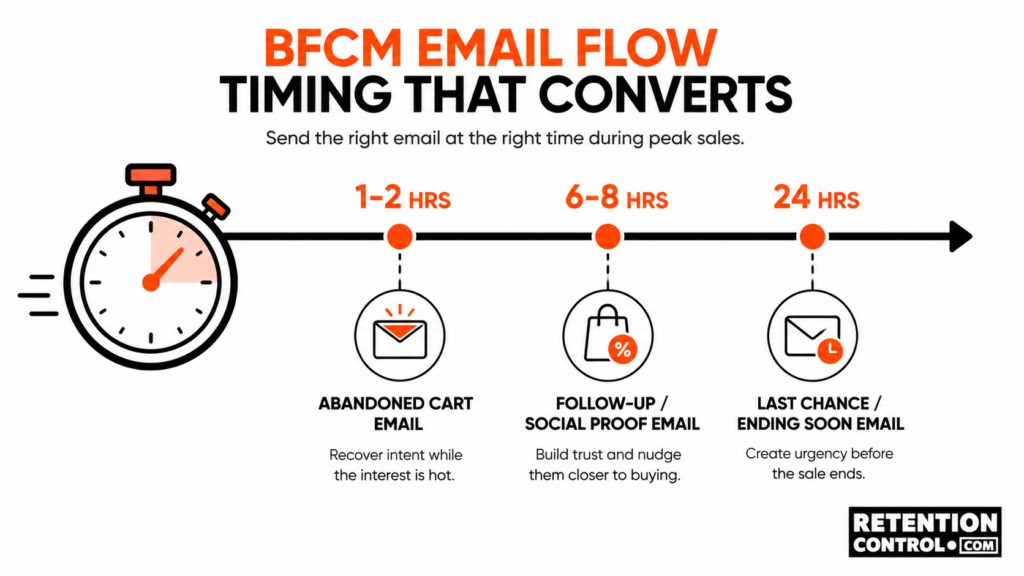
Cart Abandonment Timing (Hours, Not Days)
This is usually the highest-revenue flow in any Klaviyo account, and it needs the most attention during BFCM. Segment it by cart value so a $200 cart gets a different sequence than a $20 one, and make sure product availability and shipping cutoff dates are pulled in dynamically so you’re never recovering a cart for something that’s already sold out. Keep in mind a flow can only recover intent, it can’t fix friction sitting inside the checkout itself. If abandonment rates stay high even after your flow is live, the issue is often on the page, not the email, and Aqsa Shahzad’s Shopify checkout optimization guide is a good next read.
Post-Purchase Timing During Peak Sending
Shorten the gap between delivery confirmation and your first cross-sell touch during BFCM specifically, since purchase intent is at its highest point of the year. Outside the sale window, a slower cadence is fine. During it, waiting too long means missing the moment.
Klaviyo Setup Checklist: Triggers, Segments, Filters
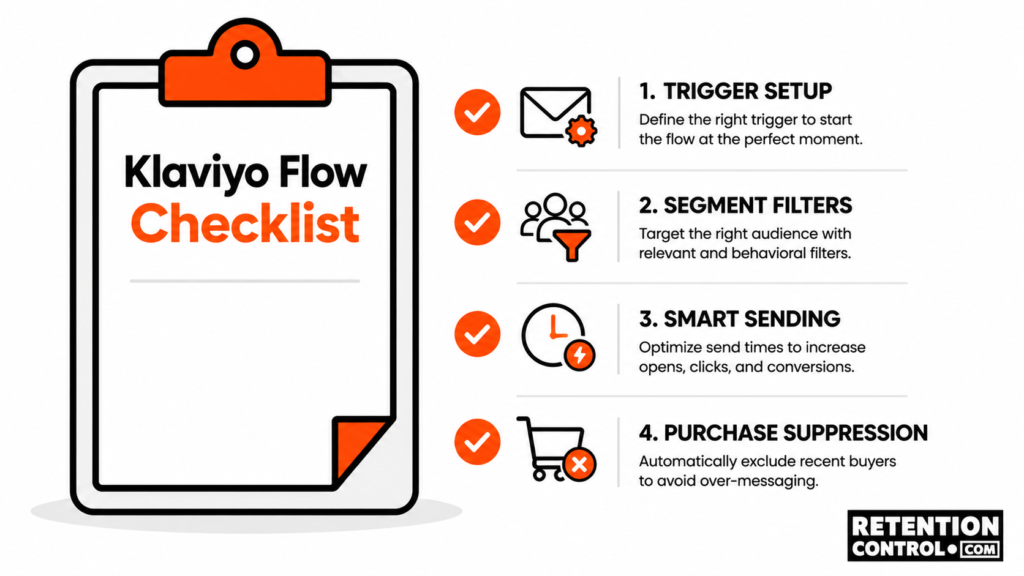
Flow Triggers to Use
Cart and checkout abandonment flows should trigger on the “Started Checkout” and “Added to Cart” metrics rather than page-view events alone, since those signals correlate far more closely with real purchase intent. Post-purchase flows should trigger on “Placed Order” with a filter for the specific date range of your BFCM promotion.
Filters That Prevent Flow Overlap
Add a filter that excludes anyone currently inside your welcome flow from also entering a BFCM-specific campaign segment at the same time. Overlapping flows are one of the most common causes of a customer getting three unrelated emails in the same afternoon, which is exactly the kind of experience that drives unsubscribes during your highest-value week.
Common Klaviyo BFCM Flow Mistakes to Avoid
Pausing flows during a live campaign send is a common instinct, but it usually backfires. The customer who abandoned a cart during your Black Friday campaign is one of your most valuable leads of the year, and pausing the flow to avoid “too many emails” means losing that recovery entirely. A better fix is Smart Sending, not a paused flow.
Another frequent mistake is leaving default flow copy untouched for BFCM. A welcome flow that doesn’t acknowledge the sale a new subscriber just signed up for feels disconnected, and a post-purchase flow that doesn’t account for realistic peak-season shipping times sets up a support ticket instead of a repeat customer.
How to QA Your Flows Before Black Friday
Run a test order through every flow that will fire during peak week, checking discount code application, dynamic product blocks, and shipping messaging as if you were the customer. Do this in October. Checking flow logic on Black Friday morning, once traffic has already started, leaves no room to fix a broken filter or a misfiring trigger before it costs you real orders.
FAQs
How many email flows do I need for BFCM?
Eight flows cover the full customer journey: welcome, browse abandonment, cart and checkout abandonment, post-purchase, cross-sell, VIP early access, win-back, and replenishment. Smaller stores can start with the first four and add the rest as volume grows.
When should I set up BFCM flows in Klaviyo?
September or October, so flows have time to be tested and your sending reputation is already warm before the traffic spike hits in late November.
Should I use SMS alongside these flows?
Yes, but selectively. SMS works best for high-intent moments inside a flow, a cart reminder or a restock alert, rather than as a full parallel messaging channel. Consent and sending history matter here too, so SMS needs its own warm-up period before BFCM.
What’s the biggest mistake brands make with BFCM flows?
Pausing flows during a live campaign send. It feels like you’re protecting the customer from too many emails, but it actually kills your highest-value recovery moment. Use Smart Sending to manage frequency instead of switching flows off.
Do these flows work outside Klaviyo, like Omnisend or Attentive?
The logic applies across platforms, welcome, abandonment, post-purchase, win-back, and VIP flows matter regardless of tool. The setup steps in this guide are Klaviyo-specific, but Omnisend and Attentive both support equivalent triggers and segmentation if that’s your stack.
Ready to Build Your BFCM Flows?
Building eight flows correctly, tested, timed, and filtered so they don’t step on each other, takes real setup time most in-house teams don’t have during Q4. As a Klaviyo retention marketing agency, this is the exact work we do inside client accounts before every BFCM.
Want a second set of eyes on what’s already live in your Klaviyo account? Book a free BFCM retention audit and we’ll show you exactly which flows are ready and which ones need work before the traffic arrives.
What’s the one flow in your account you’re least confident is ready for BFCM?